Why AI needs to know what your data means. Not just where it lives.

A plain-language guide to knowledge graphs, semantic layers, and why Enterprise Architecture was on the right path from the very beginning.
There is a question that sounds simple but keeps tripping up organisations spending millions on data infrastructure:
Why can't AI just answer the question? The data is all there.
The data is there. That's true. But data and meaning are two different things. Most organisations have invested heavily in the first while quietly ignoring the second.
This piece is about that gap, why it matters more than ever, and what closing it actually looks like in practice.
Imagine you're a very smart new employee
You just joined a company. You're brilliant - you've read millions of books, you speak perfectly, and you can do maths in your head instantly. But it's your first day.
Your manager walks up and says:
"Can you check if the conversion was good last quarter?"
You freeze. Not because you're stupid. But because you don't know:
- Does "conversion" mean sales leads turning into customers? Or the euro-to-dollar exchange rate? Or a file being saved in a different format?
- What counts as "good"? Good compared to last year? Good compared to a competitor? Good for which team?
- What is "last quarter" in this company? Do they run January–March, or is their fiscal year different?
You have intelligence but no context. And without context, you cannot reason correctly. You'd just be guessing.
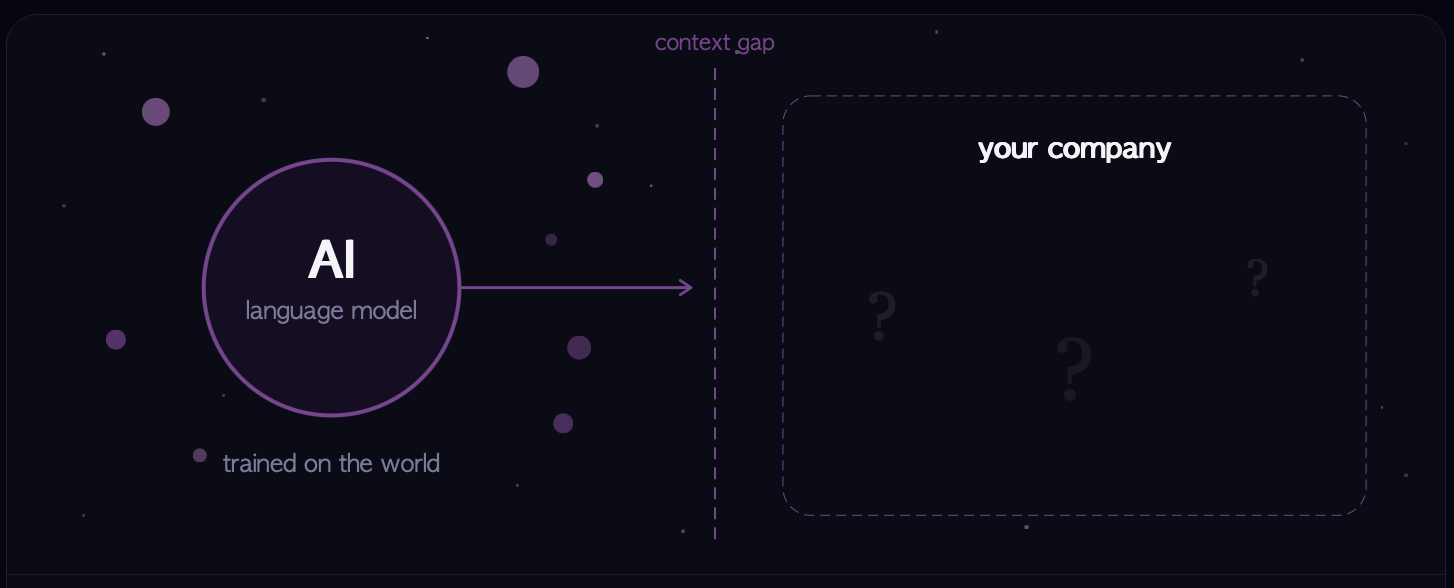
That new employee is the AI.
This is not a flaw in the technology. It is an honest reflection of what AI systems are: extraordinarily capable reasoners that know nothing specific about your organisation unless you tell them. They are brilliant generalists dropped into a room full of specialist filing cabinets, with no map and no guide.
The filing room problem
Picture your organisation's data as a large room full of filing cabinets. Each one is labelled and well-organised inside. The sales cabinet has sales data. The finance cabinet has revenue data. The marketing cabinet has campaign data.
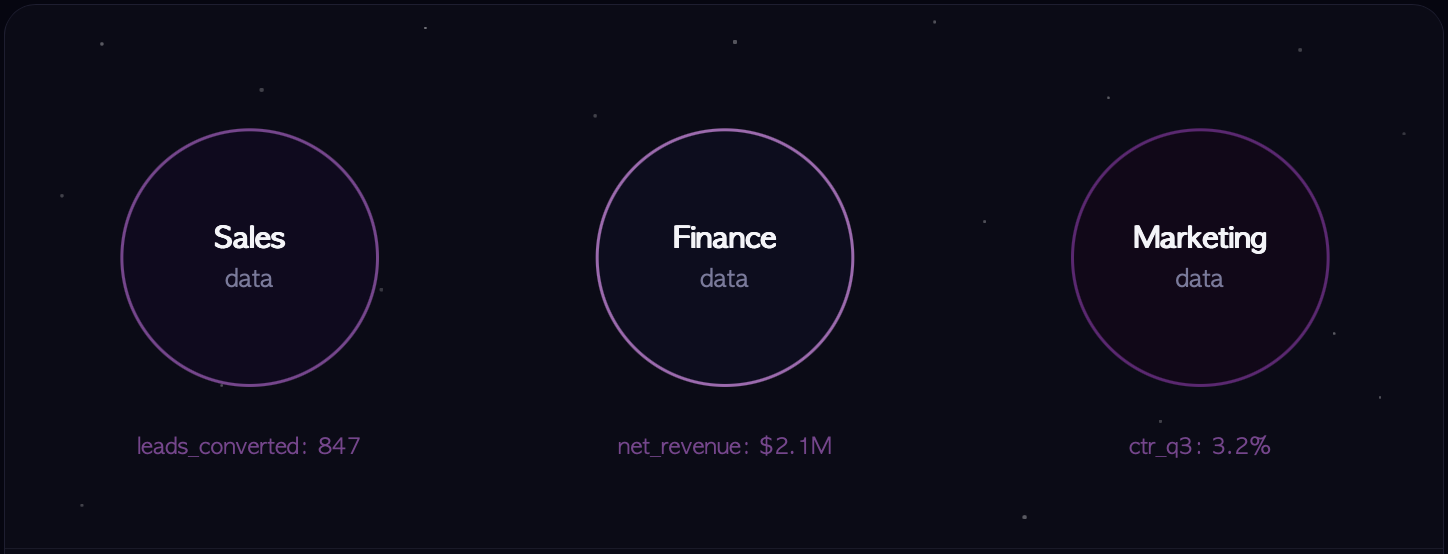
But here's the thing: The cabinets don't talk to each other.
The sales cabinet doesn't know it's related to the finance cabinet. Nobody wrote on the outside: "Hey, when a sale closes here, it eventually shows up over there as revenue - usually 30 days later."
That connection exists only in the head of the finance director who's been there 12 years.
So when the AI is asked "Did our Q3 marketing campaign make us money?" - it can open each cabinet just fine. It can read every column, every row, every figure. But it doesn't know why they're related, in what order things flow, or what the words inside actually mean in this company's language.
It will answer. It will sound confident. But it will be guessing.
The map on the wall
Now imagine someone - typically a seasoned Enterprise Architect, a data steward, or a senior analyst who's been around long enough to know where all the bodies are buried - sits down and draws a map.
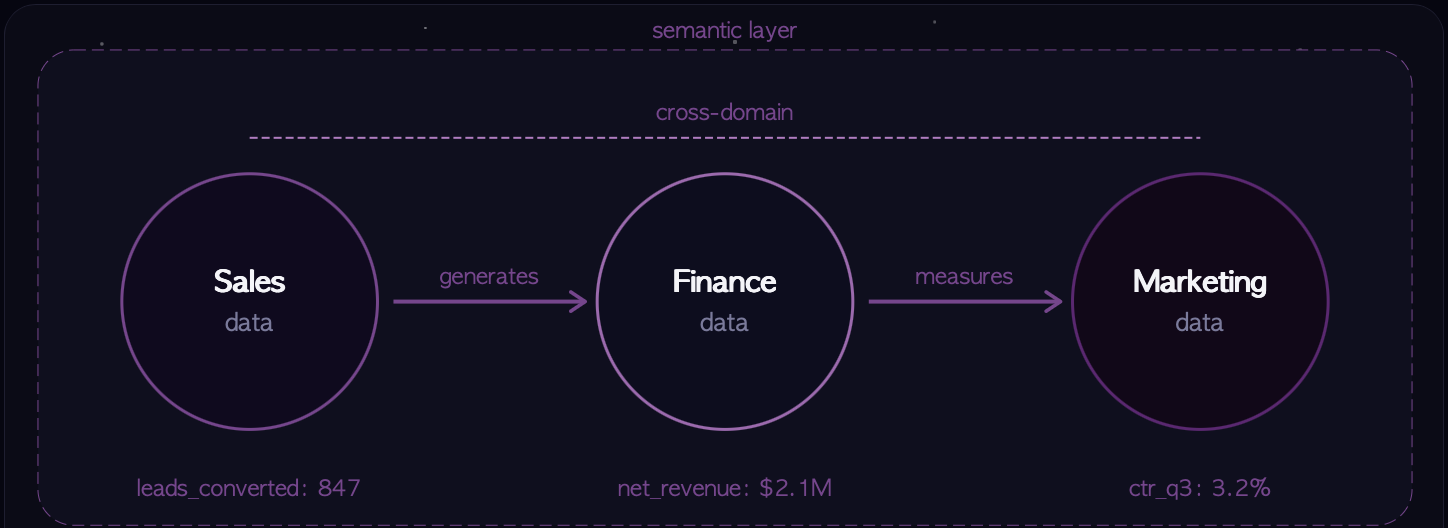
On that map they write things like:
- "Conversion" here means a lead becoming a paying customer - see the Sales cabinet, column 4.
- "Marketing spend influences pipeline revenue - but with a 6-week delay."
- "Net revenue excludes refunds and VAT. It is NOT the same as gross revenue."
- "When the CFO asks this question, she means by product line. When Sales asks it, they mean by region."
That map doesn't replace the filing cabinets. The data still lives where it lives. But the map tells anyone - human or machine - what everything means, how it connects, and why.
This is what a semantic layer does. In more technical circles it is called a knowledge graph, an ontology layer, or a context graph. The name matters less than the function: it is your organisation's reasoning, written down in a form that machines can read.
Why AI specifically needs this
AI systems are, at their core, very fast pattern matchers trained on enormous amounts of language. They learned from the internet - which means they learned many possible meanings of every word.
Without your specific map, they will default to the most common meaning, not your meaning: